
Kho Ping Hoo and Indonesia’s Craze for Martial Arts Stories
How did Kho Ping Hoo’s martial arts stories captivate Indonesian readers? Explore serialization, reading-room culture, and their lasting trail from the 1960s through the 1980s.
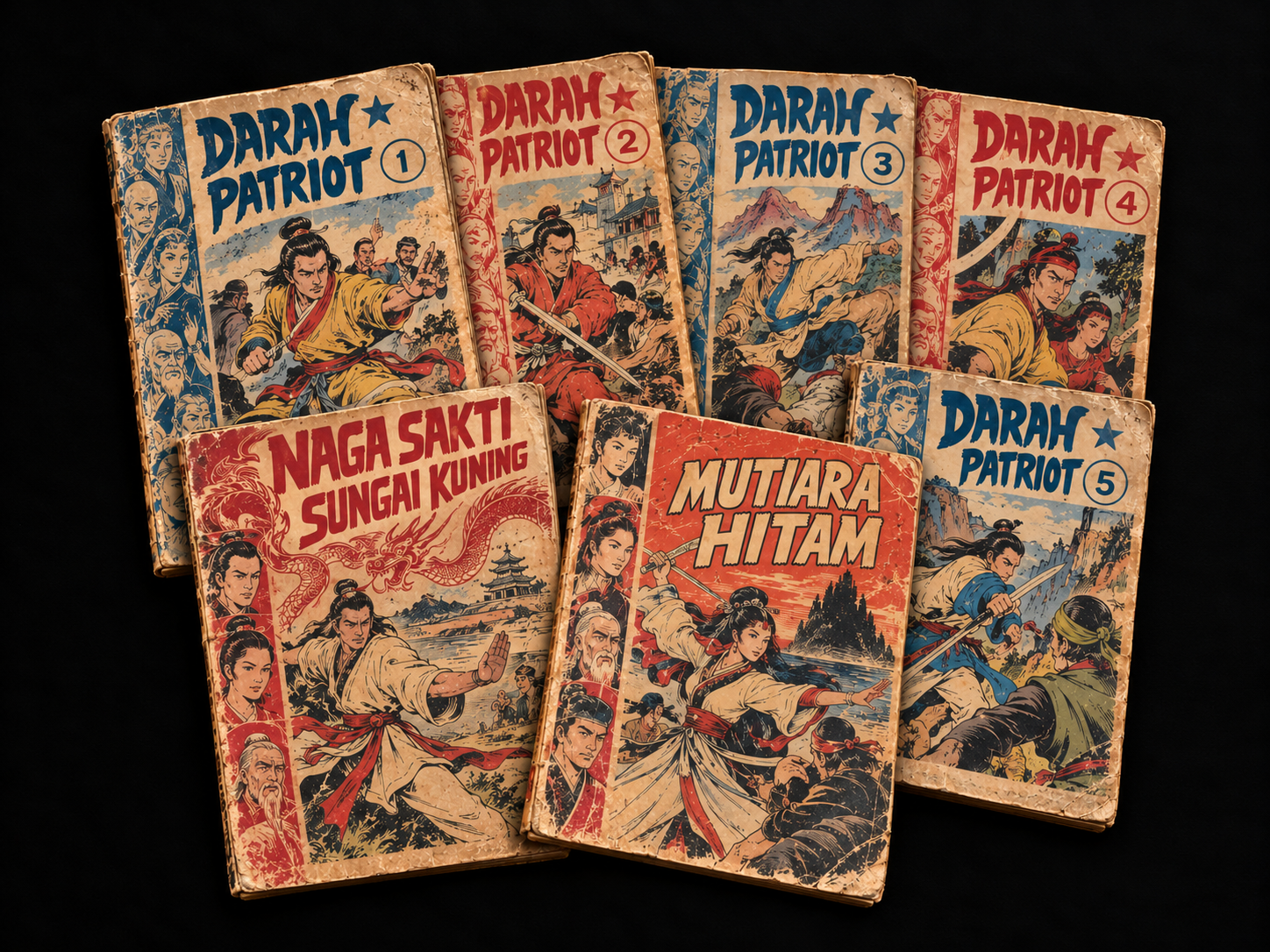
When readers waited for the next installment
The name Kho Ping Hoo often brings to mind martial artists, silat schools, and long-running adventures. But one distinction matters: Kho Ping Hoo’s work was first known as serialized martial arts fiction in prose, not as illustrated comics. Some of his stories were later adapted or referenced by comic artists, but the form that first made his name was fiction published in magazines and books.
Asmaraman Sukowati Kho Ping Hoo began writing martial arts stories in 1959. His first story, Pedang Pusaka Naga Putih (The White Dragon Heirloom Sword), was written for Teratai magazine. Readers’ response led to the story being serialized in several publications. From the beginning, this continuing format brought readers back to unfinished characters and conflicts—and left them waiting for the next installment.
From magazine serials to reading rooms
The height of his stories’ popularity is often placed between the 1960s and 1980s. Readers waited for the next part written by Kho Ping Hoo; some borrowed books from rental shops or reading rooms, while others bought volumes at bookstores. Reading did not happen only at home: the same book could pass from hand to hand and become part of a shared reading habit.
The physical format shaped the experience, too. A 2013 Kompas report described his books as small—about 14 × 11.5 centimeters—with roughly 64 pages per volume. Their compact size and stories divided across many volumes made them easy to carry, borrow, or collect a little at a time.
The same report quoted publisher CV Gema as saying that a single print run of one volume of Pendekar Super Sakti (The Mighty Warrior) once reached 12,500 copies. That figure refers to the print run for one edition, according to the publisher’s source; it is not proof that every copy sold, nor is it a sales figure for the entire series. This distinction matters so that the scale of the story does not turn into an exaggerated number.
Story worlds that cross settings
The Indonesian Literature Encyclopedia notes that Kho Ping Hoo drew on Chinese and Javanese history and cultural traditions. His martial arts world should therefore not be read as having only one cultural influence. He shaped these story materials into popular adventures in Indonesian, with characters, conflicts, and imagined worlds that readers from many backgrounds could follow.
Curiosity about the characters’ fate, battles between good and evil, and the habit of waiting for the next installment are some reasonable ways to understand the stories’ appeal. That does not mean every reader had the same experience or reasons. Available historical sources document devoted readers and how the books circulated, but do not provide a complete survey of who read them.
Why are the stories still remembered?
Kho Ping Hoo died in 1994, but reports about his publisher and devoted readers show that the stories continued to be sought out after their peak. Their influence also reached beyond the page: some appeared in stage performances, radio broadcasts, films, and comic adaptations. For today’s readers, discovering his work offers a way to look at Indonesian popular culture—including how serialized stories, bookstores, rental libraries, and reading rooms once brought each other to life.
Perhaps this is the most tangible part of the legacy: not only the many adventures in the martial arts world, but the reading habit built one installment at a time. Before stories could scroll endlessly on a screen, readers waited for the next volume to arrive.